
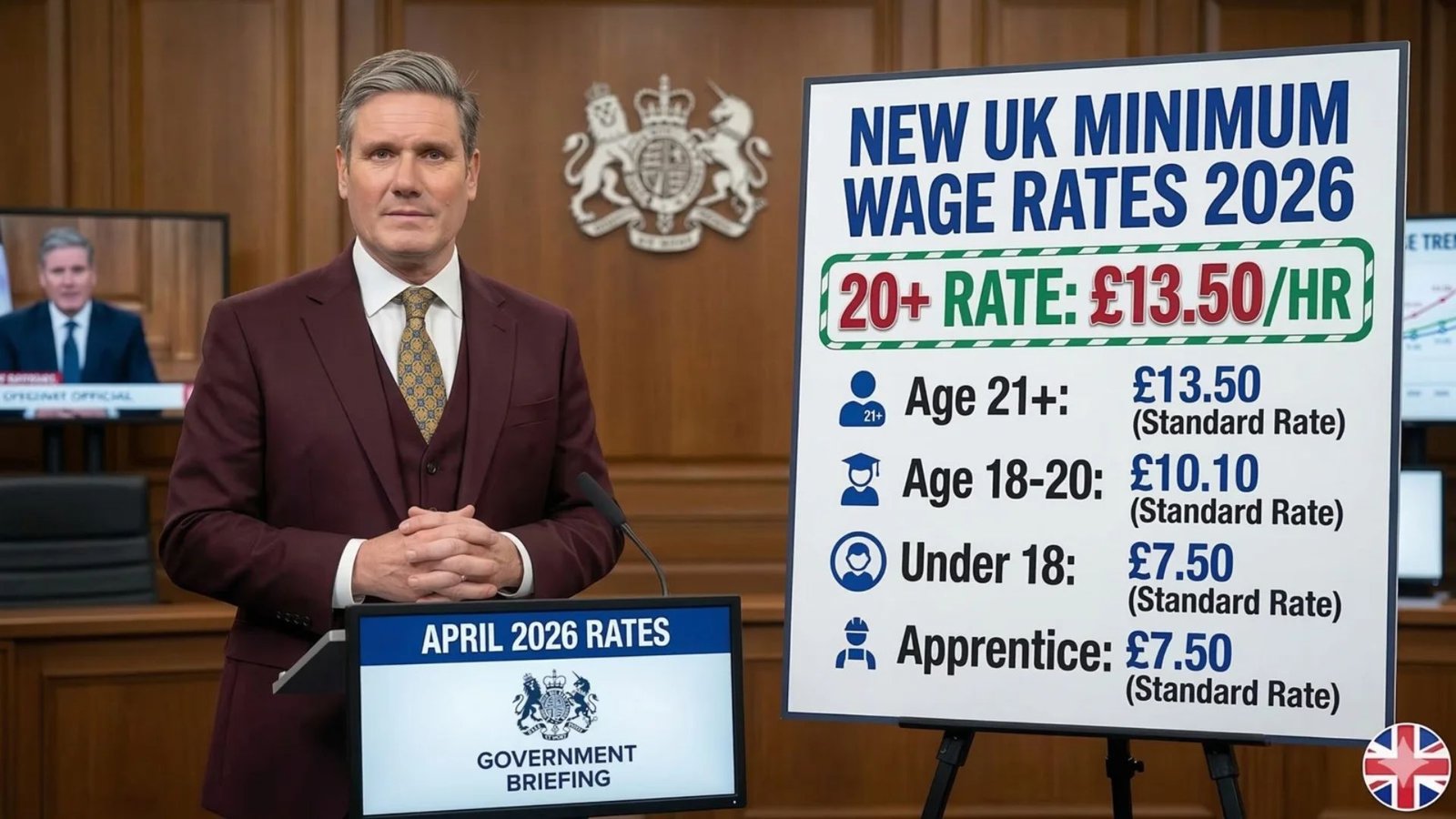
The UK government has confirmed new National Minimum Wage and National Living Wage rates that will come into effect in April 2026. These changes are expected to increase pay for millions of workers across the country and are part of the government’s effort to ensure that lower-paid employees keep pace with rising wages and living costs.
The updated rates were recommended by the independent Low Pay Commission and accepted by the government. The increase aims to maintain the National Living Wage at around two-thirds of median earnings while continuing to gradually narrow the gap between youth wage rates and the main adult rate.
New Minimum Wage Rates from April 2026
From 1 April 2026, the following hourly rates will apply in the UK:
- National Living Wage (age 21 and over): £12.71 per hour
- 18–20 year old rate: £10.85 per hour
- 16–17 year old rate: £8.00 per hour
- Apprentice rate: £8.00 per hour
The increase for workers aged 21 and over represents a 50-pence rise from the previous £12.21 rate, which equals a 4.1% increase. Younger workers will see even larger percentage increases, with the 18–20 rate rising by 8.5%.
What the Increase Means for Workers
Although the hourly increase may appear modest, the impact can be significant for full-time employees. Someone working full-time on the National Living Wage could see their annual income increase by around £900–£1,000 before tax, depending on weekly working hours.
The pay rise is expected to benefit millions of workers across the UK, particularly in sectors such as retail, hospitality, care services, and cleaning, where minimum wage roles are common.
For many households dealing with higher living costs, even small hourly increases can help improve monthly income and ease financial pressure.
Why the Government Is Increasing Minimum Wage
The UK reviews minimum wage rates every year. The Low Pay Commission examines economic data such as inflation, employment levels, and wage growth before recommending new rates.
The government has stated that the goal is to ensure that the National Living Wage does not fall below a certain proportion of average earnings in the country. Maintaining this balance helps protect low-income workers while attempting to avoid negative effects on employment levels.
In recent years, minimum wage increases have been part of broader policies aimed at improving living standards and supporting workers during periods of rising costs.
Concerns Raised by Businesses
While many workers welcome the higher wages, some business groups have expressed concerns about the potential financial impact on employers. Industries that rely heavily on minimum-wage labour may face increased operating costs as wages rise.
Some employers argue that higher wage bills could lead to higher prices, reduced hiring, or changes to working hours. However, supporters of the increase say previous wage rises have not caused significant job losses and that higher wages can boost worker productivity and spending in the economy.
What Employees Should Check in April 2026
Once the new rates take effect in April 2026, employees should review their payslips to make sure they are receiving the correct hourly wage. Employers are legally required to pay at least the minimum wage for a worker’s age group.
If a worker believes they are being underpaid, they can raise the issue with their employer or report it through official government channels responsible for enforcing wage laws.
The 2026 minimum wage update represents another step in the UK’s ongoing effort to increase earnings for lower-paid workers while maintaining a balance between employee support and business sustainability.
Conclusion
The announcement of the new UK minimum wage rates for 2026 represents another step in the government’s effort to improve earnings for lower-paid workers. With the National Living Wage increasing to £12.71 per hour for workers aged 21 and over, millions of employees across sectors such as retail, hospitality, and care services are expected to benefit from higher pay.
While the increase may raise concerns among some businesses about higher labour costs, it is intended to help workers keep up with rising living expenses and maintain fair wage standards. As the new rates take effect in April 2026, both employers and employees should ensure they understand the updated rules and confirm that wages meet the legal minimum requirements.
Frequently Asked Questions (FAQ)
When will the new UK minimum wage rates start?
The new minimum wage rates will come into effect on 1 April 2026. From this date, employers must pay workers according to the updated hourly wage levels.
What is the National Living Wage for 2026?
From April 2026, the National Living Wage for workers aged 21 and over will increase to £12.71 per hour.
Will younger workers also get a pay rise?
Yes, younger workers will also see wage increases. The 18–20 age group rate will rise to £10.85 per hour, while workers aged 16–17 and apprentices will receive £8.00 per hour.
Do employers have to follow the new wage rates?
Yes. Employers in the UK are legally required to pay at least the National Minimum Wage or National Living Wage depending on the employee’s age and employment status.